




For most of her career, Susan Hicks watched vision correction, including Refractive Lens Exchange, happen from the other side of the desk. As the Optician and Front Desk Concierge at Modern Vision Centers in Des Moines, Iowa, she greets patients, fits eyewear, and helps people understand what their eyes are about to go through. And her history in eye care runs deep.
During college, she worked in an ophthalmologist’s office in eastern Iowa, back when cataract patients stayed in the hospital for a week and returned with their eyes wrapped, later fitted with what the staff called “pop-bottle-bottom” lenses. Later, in North Carolina, she taught patients to wear and clean hard contacts using a five-step process before and after every wear.
That history and the contrast between the then of weeks-long recoveries and the modern vision correction of now shape how she approaches her work today.
“Each day I’m thankful to be able to share with Iowa & the Des Moines metro area what Modern Vision Centers is able to provide in bringing their sight into the 21st century.”
– Susan Hicks
What did vision feel like before RLE?
Susan never wore glasses growing up, which she counted as a blessing while watching family members manage theirs daily. Age changed that. Over-the-counter readers crept in, then multiplied into pairs scattered wherever she might reach for them. Book clubs and quilting and the close-up detail of her hobbies all started to demand magnification. An optometrist at a previous office had been honest with her about contacts. He told her he would order them, but with quilting, reading, and gardening, the clarity would not match what she wanted. He was right. Distance vision slipped too. “As I matured it became more noticeable that objects at a distance were becoming more difficult to see as well as struggling with close-up vision,” she said. And given her decades-long experience in eye care, she knew the prescriptions would keep climbing.
What made RLE the right choice?
Refractive Lens Exchange was an unfamiliar term to her, the way it is for many people across the Des Moines metro. The more she learned, the more her interest grew. She asked MVC co-founder and refractive surgeon Drew Dickson, MD if the prescription in the Light Adjustable Lenses, a premium IOL used in RLE, would shift as she aged. “His reply that ‘your eyes won’t change after this procedure’ helped me go from curious to ready.”
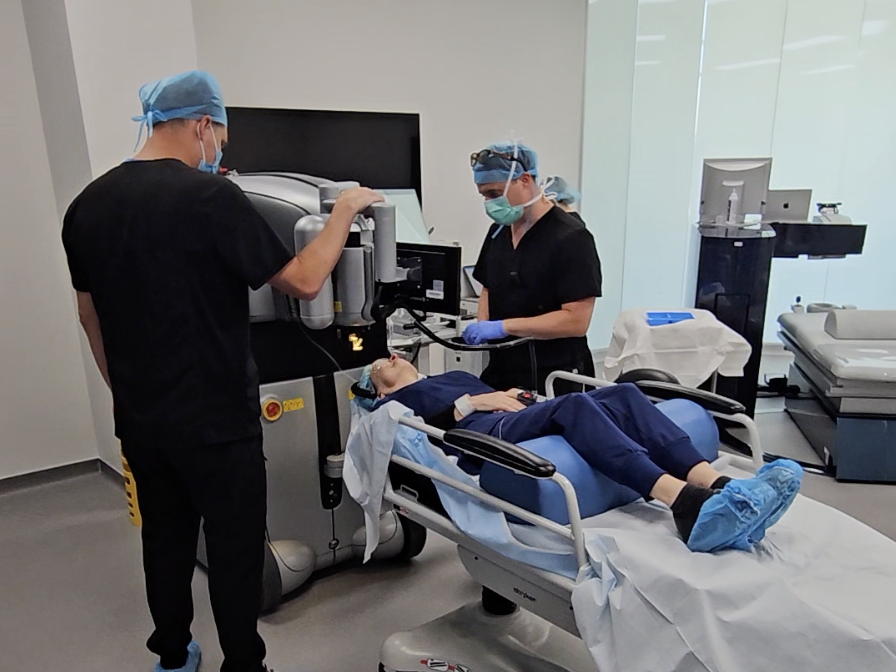
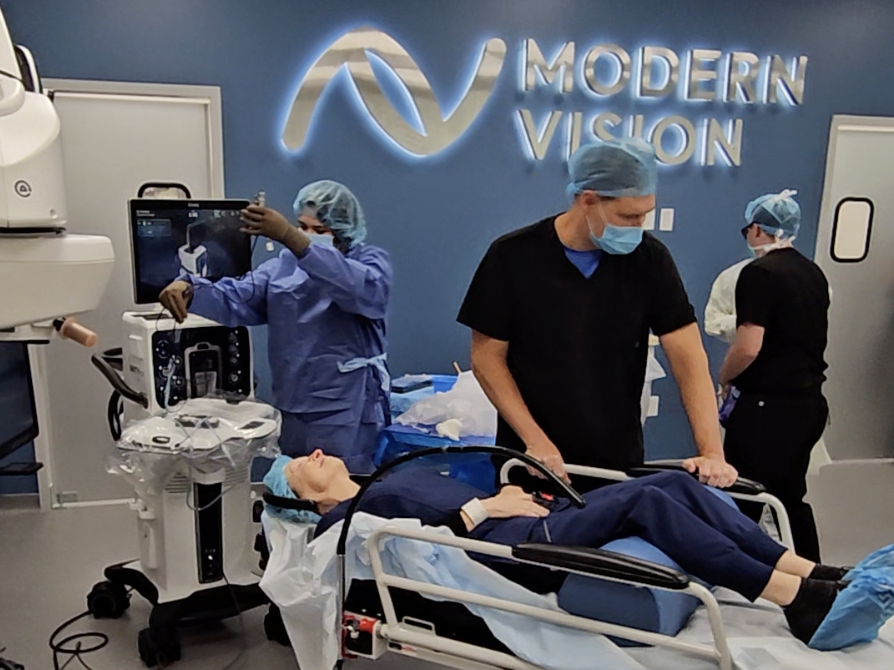
Working inside the clinic made the early decision easy. She knew the team and how efficiently each member worked. The closer surgery got, the more her perspective shifted to some of the normal nerves that come along with being a patient. She had never had any surgery on her eyes before. “Watching Dr. Dickson perform surgeries made me very comfortable with his style & priorities,” Suan said. The day of RLE, the Des Moines surgical team rallied around her in the Vision Correction Suite. After a quick 20 minutes, she was in the recovery room, then on the way home with her driver to recover. However, as she opted for the Light Adjustable Lens, her journey to clear vision was not yet complete!
What is the Light Adjustable Lens and what does an adjustment feel like?
The Light Adjustable Lens works differently from other intraocular lenses used in RLE, which is why Susan’s vision was not finished the day she left her procedure. A standard lens arrives at a fixed power, locked in the moment the surgeon places it. The LAL is made from a photo-sensitive material that stays adjustable after it goes in. Surgery removes the natural lens and sets the LAL in place, but the eye still needs time to heal and settle before anyone knows the exact prescription it has landed on. Once it stabilizes, Dr. Dickson uses precise UV light treatments to reshape the lens power inside the eye, dialing the focus in over a series of short sessions. Each treatment refines the result, and a final light application locks the prescription in place.
“When the light-treatment begins the adjustment, it only takes a minute or minute & a half. The light is intense and not painful,” she said.
What surprised her after RLE surgery?
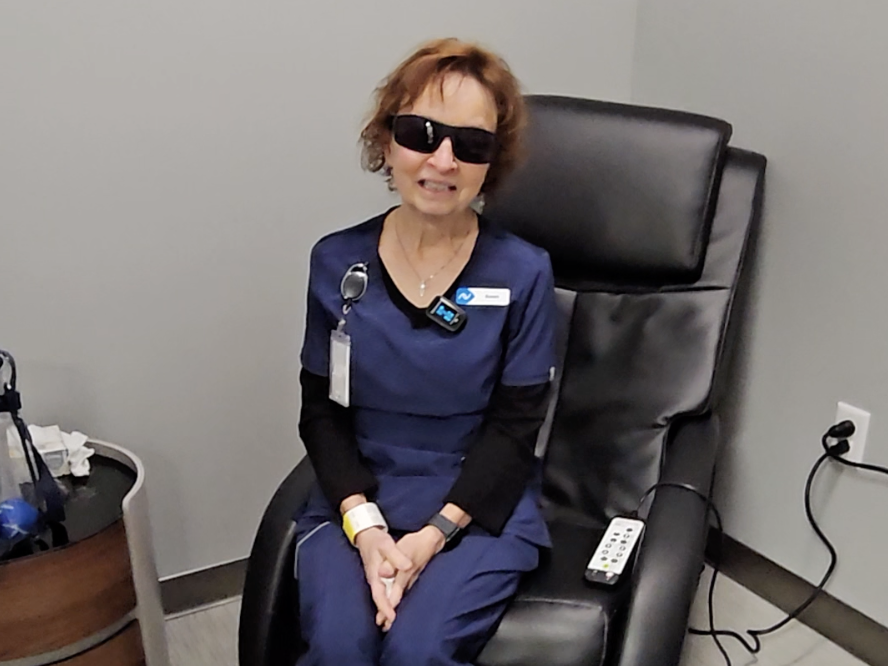
There is a bonus to opting for RLE that removes a concern later in life – replacing the natural lens during RLE means cataracts will never develop. Dr. Dickson had mentioned the lens would also remove any concern about developing or future cataracts, which Susan had thought was a nice extra she did not really need. Hours after surgery, the surprise was color. “Hours following the surgery, it was amazing the depth of color everywhere!” she said. A quilter, she had not realized how much the color around her had faded until it came back.
The everyday perks for RLE show up at work. She helps patients without glasses, without squinting at a monitor, with a confidence she carries into every interaction. She still laughs about Dr. Dickson’s advice. He told her to pause before reaching for readers and ask whether she actually needed them or was acting on habit. More often than not, she does not need them. “The front-row seat I have to see the changes patients experience is such a privilege,” she reflected. After RLE, she can reflect on the power of those changes herself.
“RLE gave me back my confidence and freedom.”
– Susan Hicks
If you have been managing your vision with a growing pile of readers and wondering whether there is a permanent answer, the team at Modern Vision Centers in Des Moines can tell you whether RLE fits your eyes. Call 515-674-2020 or visit mvcvision.com to start with a consultation.